World Day for Glaciers and World Water Day 2026
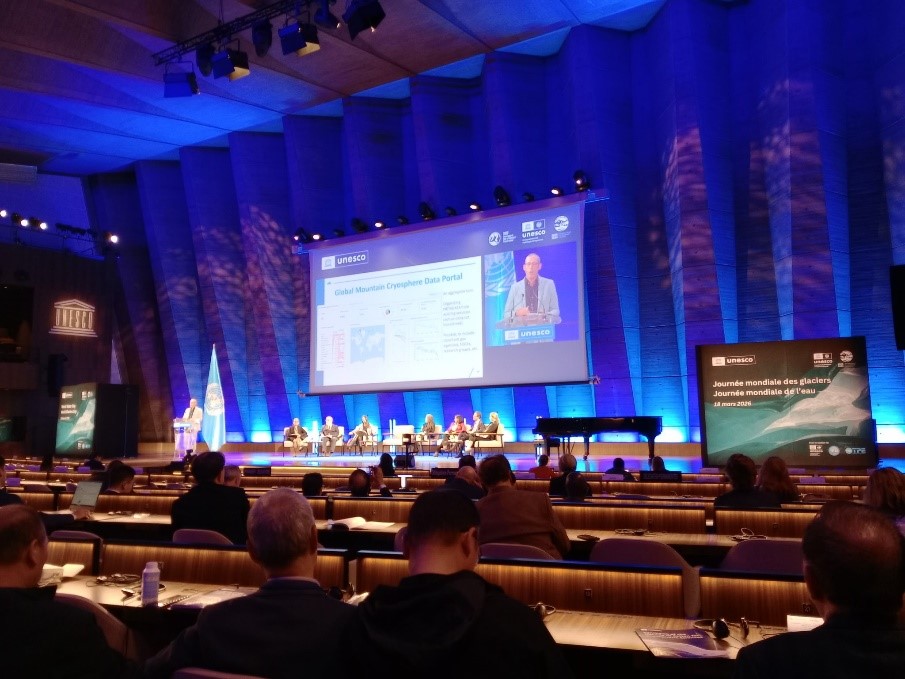
Sabine Rentschler, our Vice President, attended the event hosted by UNESCO and provides a brief summary of the two days below.
At the UNESCO two-day international conference held in Paris on 18–19 March 2026, delegates marked both the World Day for Glaciers and World Water Day 2026 – events that closed the International Year of Glacier Preservation 2025 and launched the new Decade of Action for Cryospheric Sciences (2025–2034).
Over the past year, UNESCO and the World Meteorological Organization have jointly mobilised 75 international organisations and 35 countries. Their work has been structured into four task forces dedicated to global campaigns, capacity building, research and monitoring, and policy advocacy.
Scientists, policymakers and civil‑society representatives from across the globe travelled to Paris to take stock of progress and, at the same time, look ahead. The coming years, they stressed, will be decisive for protecting rapidly shrinking glaciers and ensuring reliable water supplies worldwide.
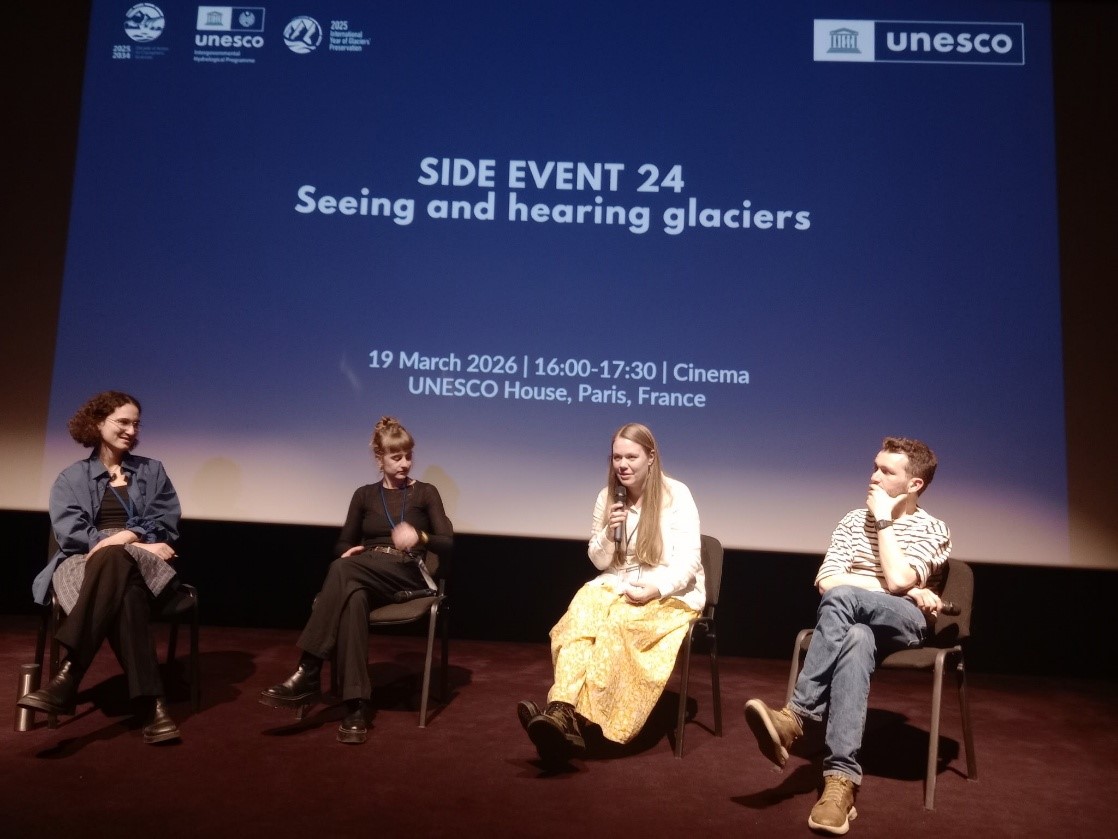
From the outset, UNESCO underscored how closely glacier retreat, water availability and climate change are interlinked. Throughout panel discussions, technical sessions and side events, participants emphasised that only globally coordinated research and policy action can meet the scale of the challenge.
Four task forces, established in 2025, presented the progress of their work. What emerged was a shared understanding: building a new global cooperation network takes time. The past year was, above all, a period of laying foundations and getting initiatives off the ground.
Task Force 1 – Global Campaign
The Task Force presented the initial groundwork for a global awareness campaign. Its long‑term goal remains unchanged: to mobilise the public, policymakers and institutions more effectively around the critical importance of glaciers.
Task Force 2 – International Conference on Glaciers’ Preservation, Regional Workshops and Capacity Building
International cooperation continues to face significant challenges, from language barriers to differing institutional approaches. Many activities are still in development, yet the first training and exchange programmes have already been launched successfully. Expanding participation remains a central priority.
Task Force 3 – Research and Monitoring Initiatives
The Task Force highlighted the immense effort required for data collection and the absence of a shared global data platform, a gap that severely limits efficient exchange between governments, NGOs and the scientific community. Establishing such a platform is seen as a crucial step toward consolidating research findings worldwide. Participants also stressed that communication is an essential skill for advancing this work.
Task Force 4 – Policy Advocacy, Partnerships and Resource Mobilisation
This Task Force underscored the persistent obstacles to securing funding for key glacier‑related projects. It called for giving glaciers a stronger voice in international policy‑making processes and for strengthening partnerships to mobilise the necessary resources.
All participants reached a sober but realistic conclusion: one year is far too little to establish a new global knowledge and governance system. The most urgent tasks ahead include harmonising data, methods and standards; securing stronger, long‑term funding; improving international communication; and building stable institutional structures for the long‑term monitoring of glaciers.
One sentence in particular resonated throughout the event: “What happens in the glaciers doesn’t stay in the glaciers.” It captured the far‑reaching consequences of glacier retreat worldwide.
Speakers repeatedly highlighted the immense challenge of conducting glacier monitoring above 3,000 m asl. Cooperation is especially critical in the Hindu Kush-Himalaya – the so‑called “Third Pole” – where communities are already facing the loss of cultural heritage, infrastructure and livelihoods. The message was unmistakable: without decisive action, the world risks sliding toward a form of global “water bankruptcy”.
A clear appeal was directed at the scientific community and beyond: “Help us translate science into policy.” Data alone is not enough. It must be communicated in a way that is understandable, politically actionable and visible to society. Simply sharing information is no longer sufficient. It must be translated, contextualised and brought to life – especially for young people and civil society.
And finally, a reminder of the scale at stake: the world’s roughly 275,000 glaciers store around 70% of all fresh water. The global community cannot afford to think in silos. What is needed now are coordinated international decisions, robust educational initiatives and sustained investment in local scientific teams.
The 2026 UNESCO Conference demonstrated that global efforts to preserve glaciers are gaining momentum. At the same time, it underscored that the international community is still at the very beginning of a long and complex journey. The newly launched Decade of Action for Cryospheric Sciences will play a decisive role in bringing together scientific evidence, political action and public engagement – all essential to safeguarding glaciers and securing global water resources for the future.
The message was clear: this is a collective task. Everyone is invited to get involved and lend their support.