Week two: science, ice, and outreach
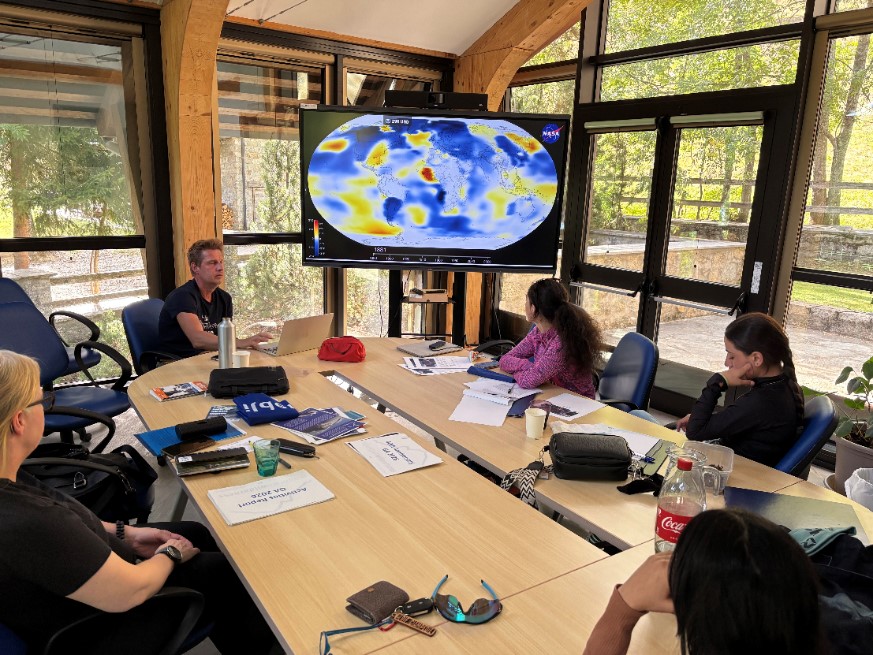
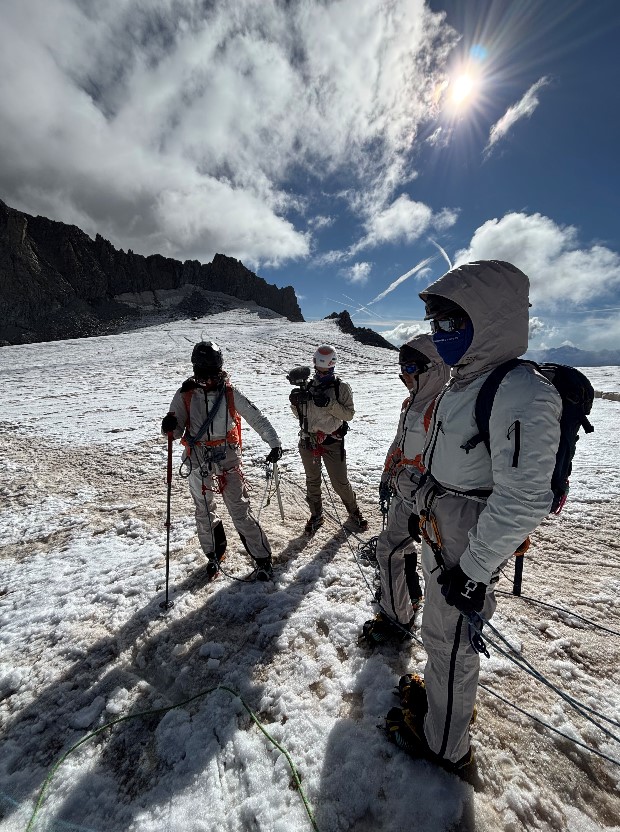
The second week of training – coordinated entirely by Lorenza Pratali, cardiologist and researcher – unfolded like a crash course in the science of the high mountains. Against the stunning backdrop surrounding the Fondazione Montagna Sicura, CNR (National Research Council of Italy) researchers introduced the young Pakistani mountaineers to the hidden worlds of glaciers, the atmosphere, and the hydrosphere, always pairing theory with hands‑on experience. On the ice with Ilaria Baneschi, they explored how water and soil respond to glacial melt; with Jacopo Gabrieli, they learned to read the glacier itself and move across it safely.
Mountaineering instructors Patrizia Romagnolo and Elisa Peyrot pushed their technical skills further, and it was striking to watch the girls refine their crampon work as they connected scientific knowledge to real‑world hazards. Even online sessions kept curiosity high, sparking questions about altitude health, pollution, nutrition, and the science behind acclimatization. Yoga and BLSD (Basic Life Support and Defibrillation) training rounded out a surprisingly holistic week.
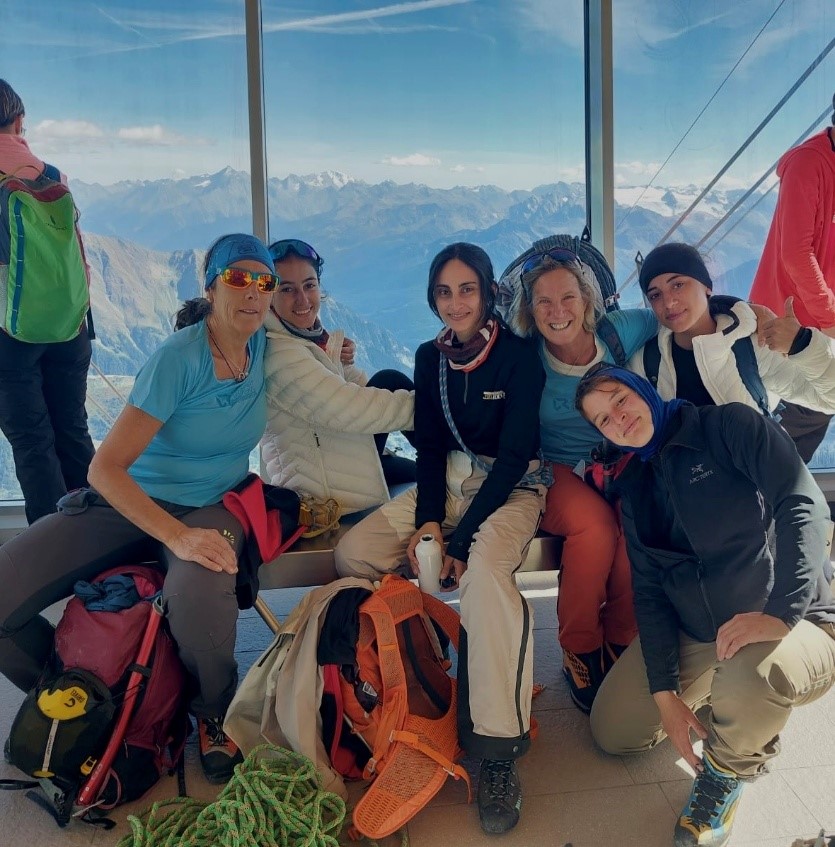
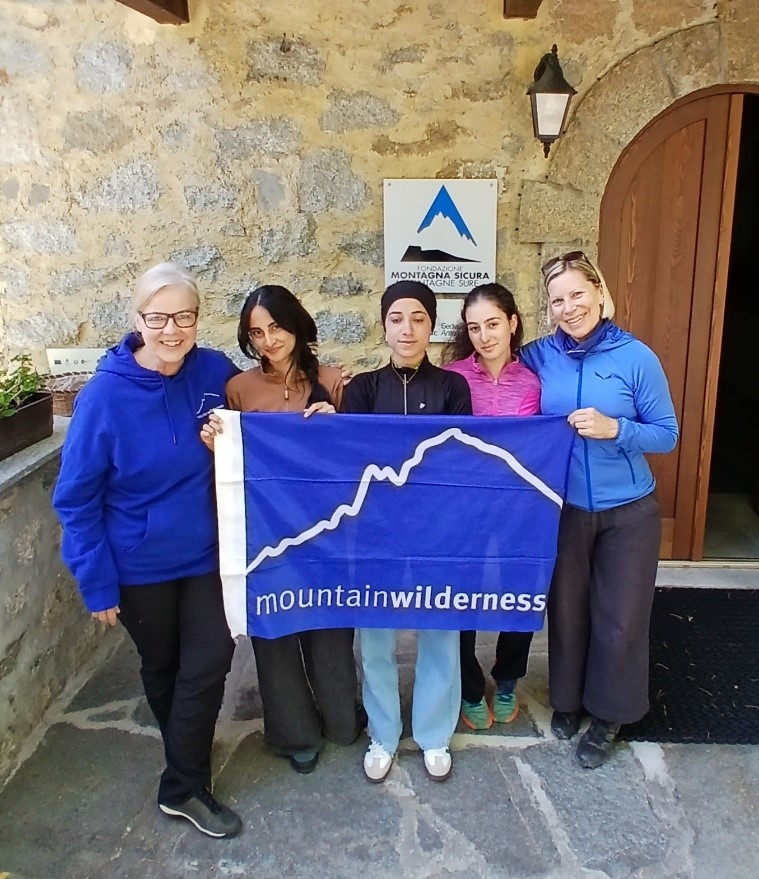
During the weekend, our president, Gabriella S. Vanzan, and our vice president, Sabine Rentschler, met up with the girls in Courmayeur. This led to a very interesting exchange, full of details and information on Mountain Wilderness, its history as well as its national and international structure and activities, including the long-standing Shrinking Glaciers project. We hope that this wealth of information and experience will help them on their new journey as a women’s association in Pakistan.
Evenings brought a different kind of learning: Pakistani dinners cooked together, long debriefs, and conversations about future research in Swat. New international contacts promise lasting support for the Sheen Alpine Association.
It was an intense week, but it planted something essential: the understanding that exchange and collaboration between the scientific community and civil society organisations, with a view to public outreach, are powerful tools for protecting mountain environments and empowering the women who explore them.